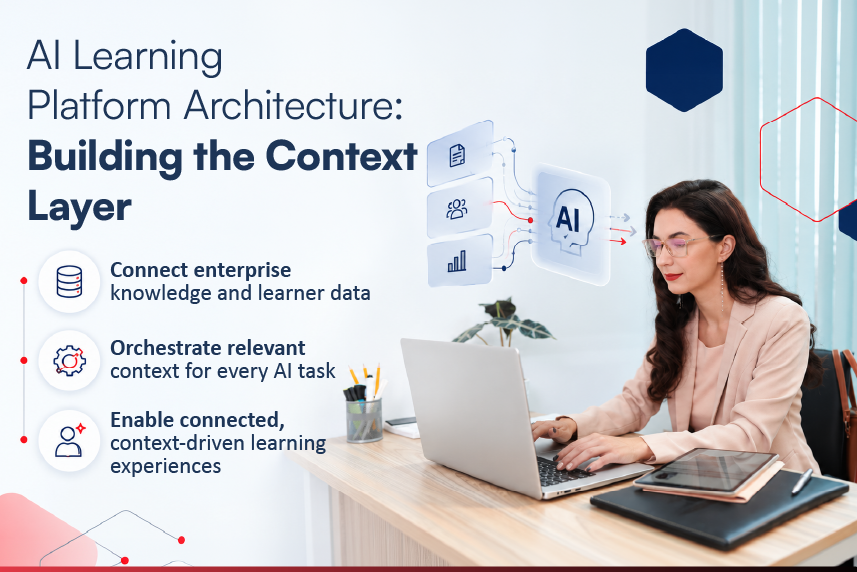


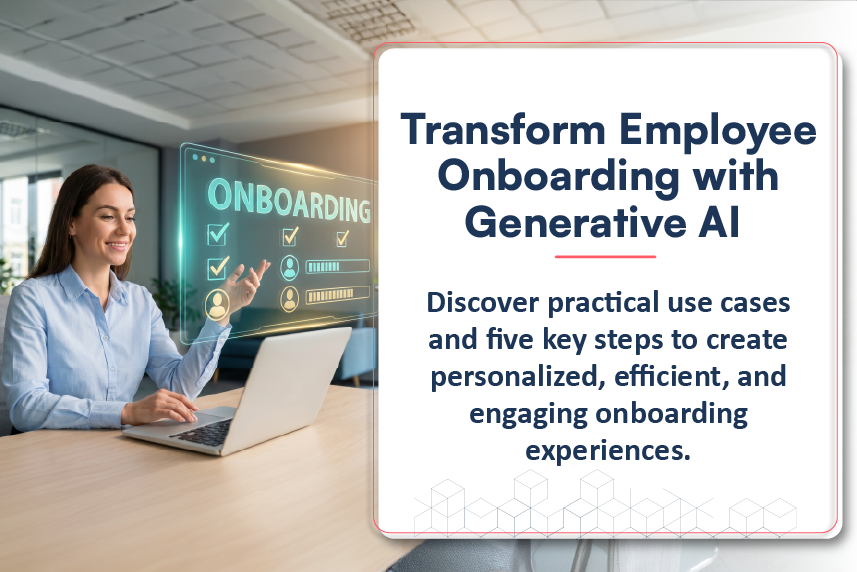
Operationalizing Generative AI (GenAI) in onboarding is a strategic lever to accelerate today’s workforce. Beyond simple automation, GenAI serves as a foundational layer for Intelligent Learning Ecosystems. For the enterprise, this translates into accelerated time-to-productivity, personalized engagement, and a move toward Ecosystem Orchestration, where recruiting, learning, and analytics products are seamlessly integrated.
We are navigating a massive technological revolution, with the introduction of Generative AI reshaping the world at an unprecedented pace. In this fast-evolving landscape, tapping into the power of such advancements is key to maintaining a competitive advantage and keeping pace with the speed of technological transformation.
According to Precedence Research, the global Generative AI in HR market size is projected to reach around $2,091.4 million by 2032 while growing at a CAGR of 15.77% during the forecast period 2023-2032.
To capitalize on this, organizations must understand the core benefits of Generative AI in corporate onboarding and learning that align with specific organizational KPIs.
Generative AI empowers organizations to create tailor-made onboarding experiences. To learn how to implement Generative AI to personalize and transform the onboarding experience, watch our Power Hour on the ‘Role of Generative AI in Onboarding and Learning.’
This insightful discussion was hosted by Anushree Sharma, Associate Director, Harbinger Group and featured industry experts, Tracie Sponenberg, Chief People Officer, The Granite Group; Stephen Lytle, Human Resources Director, ChenMed; and Prashant Khambekar, Senior Vice President, Harbinger Group.
Top Enterprise GenAI Use Cases for Improving HR Efficiency
Each new hire brings unique skills, perspectives, and experiences to an organization. With enterprise-grade Generative AI, HR professionals can revolutionize how organizations welcome and nurture talent.
Let’s talk about a few GenAI use cases that make the onboarding process frictionless and more effective for both the HR department and new hires.
1. Automated Knowledge Retrieval & Query Resolution
During onboarding, new employees often have several questions regarding company policies, benefits, work culture, and roles. Traditional methods like FAQs and manuals might not cover all the possible queries, leaving new hires frustrated and uncertain.
With Generative AI in onboarding, HR teams can develop intelligent chatbots or virtual assistants that understand and respond to natural language queries. These AI-powered assistants can access a vast database of information, including company policies and employee handbooks, to provide accurate, real-time responses to each new hire’s questions.
2. Frictionless Document Intake and Verification
Integrating Generative AI in onboarding can modernize document intake procedures, reducing manual effort and minimizing errors.
Generative AI algorithms can automatically extract relevant information from submitted documents and cross-verify it against pre-defined compliance criteria. This automation not only expedites the onboarding lifecycle but also ensures greater data integrity and accuracy.

3. Self-Paced Policy & Cultural Alignment
One of the crucial aspects of successful onboarding is ensuring that new employees comprehend and align with the company’s policies, values, and culture.
By incorporating AI-driven interactive eLearning modules or gamified content, organizations can offer new employees an engaging and personalized way to learn about the company’s ethos. These modules can adapt to individual learning preferences and progress, making the process operationally efficient. This is a critical step for leaders learning how to automate employee onboarding using AI to remove manual bottlenecks.
Harbinger helped an HCM software vendor integrate its onboarding solution system with an external ATS, enabling automated data exchange between the two platforms. This integration resulted in a seamless end-to-end hiring and onboarding experience for customers.
4. Adaptive Learning of Domain Knowledge
Generative AI algorithms can analyze the new hire’s prior experience and current job role and curate a tailored learning architecture. This path may include online courses, interactive training materials, or mentorship opportunities that align with the new employee’s skill set and career aspirations.
As a result, new hires can rapidly acquire domain knowledge, accelerating their integration into the production environment and maximizing their potential impact on the organization.
5. Behavioral Nudge Strategies
Nudge strategies serve as a smart approach to onboarding, leveraging human psychology to motivate users to take the desired actions. When operationalized correctly, these nudges seamlessly blend into the user experience without causing any interruption or annoyance.
By carefully sequencing the nudges, the onboarding process can be enhanced, ensuring a smooth user flow. Unlike traditional onboarding tools, nudges are non-intrusive, cost-effective, and offer superior benefits.
Apps that utilize nudges can create a more enjoyable and engaging journey for new hires during onboarding. To achieve effective results, HR organizations can utilize auto-generated reinforcement nuggets.
5 Steps to Integrate Generative AI in Onboarding
| Phase | The Old Way (Silos) | The GenAI Way (Ecosystem) |
|---|---|---|
| Discovery | Static Manuals & FAQs | Natural Language Knowledge Retrieval |
| Compliance | Manual Document Verification | Automated Data Extraction & Integrity |
| Learning | One-Size-Fits-All Modules | Adaptive, Role-Specific Learning Paths |
| Support | Ticket-Based (Delayed) | 24/7 Intelligent Concierge Support |
| Outcome | Delayed Productivity | Accelerated Time-to-Productivity (TTP) |
Consider a situation where a new employee feels less than comfortable in the initial days of a new job. This forms a poor impression of the employer on the new employee, which can never be erased. So how can organizations do a better job with onboarding on those first few critical days of new hires at work? Well, the solution is Generative AI.
By leveraging Generative AI, organizations can reduce talent churn, make the onboarding process smoother and more efficient, and offer a human connection.
In this digital age, where automation and Generative AI are reshaping various business functions, integrating Generative AI in onboarding programs presents a unique opportunity to create truly immersive experiences for new hires.
Now that we understand the possibilities and use cases of Generative AI in onboarding, let’s learn how to implement this advanced technology. We have outlined a series of steps to help you seamlessly integrate Generative AI in onboarding. Without further ado, let’s dive in and explore together.
1. Strategic Assessment and Planning
Begin by evaluating your onboarding process and identifying areas that can benefit from Generative AI integration. Determine the specific ROI-driven objectives you want to achieve through AI, such as personalized content, virtual mentorship, or chatbot support. Collaborate with HR and IT teams to outline a roadmap for the Generative AI implementation, considering budget, resources, and timelines.
2. Data Governance and Preprocessing
Generative AI relies on high-fidelity datasets to generate meaningful and relevant content. Gather historical onboarding data, learning materials, and employee feedback to build a comprehensive dataset. Ensure the data is accurate, diverse, and complying with privacy regulations (GDPR/CCPA). Preprocess the data to remove inconsistencies, creating a clean dataset ready for Generative AI model training.
3. Generative AI Model Selection and Orchestration
Choose the appropriate Generative AI architecture that aligns with your onboarding objectives. Options may include GPT-5.4, BERT, Gemini 3 Flash or other language models, depending on the complexity of tasks you want to automate.
Pretrained models can be fine-tuned on your dataset to make them more contextually relevant to your organization. Train the Generative AI model using powerful hardware and distributed computing to optimize performance and reduce training time.
4. Scalable Content Generation
Use the trained model to generate role-specific onboarding content for each new hire. This content could include role-specific learning modules, video tutorials, and relevant resources based on individual skills and preferences.
5. Chatbot Integration and Support
Integrate AI-powered concierge services into your onboarding process to provide continuous support and assistance to new hires. These chatbots can answer common queries, guide new hires through administrative procedures, and offer resources on demand.
Learn how Harbinger automated HR ticket resolution and increased HR efficiency by implementing a cloud-based chatbot solution. There was a significant improvement in ticketing productivity, with the response time reduced from 3-5 minutes to 1.30 seconds.
Summing Up
Generative AI represents a paradigm shift in employee onboarding. By leveraging the power of Generative AI, organizations can create a highly efficient infrastructure and an engaging experience for new hires.
While Generative AI can automate onboarding, it is important to apply the human touch to the overall process. Balancing automation with personal interactions helps create a welcoming and supportive onboarding experience. Additionally, regularly updating and fine-tuning the AI system based on employee feedback will ensure its effectiveness over time.
Are you seeking a helping hand to automate employee onboarding using AI? Click here to explore transformative HRTech solutions to achieve your business goals.
Frequently Asked Questions (FAQs)
What is the primary evolution of HR Tech platforms in 2026?
The shift is from “Systems of Record” to Intelligent Workforce Platforms. In this era, the focus is on ecosystem orchestration, where AI agents don’t just store data but also act on it to seamlessly connect recruiting, learning, and analytics into a single source of truth.
How can AI solve the "forgetting curve" in high-stakes training?
By using nudge learning platforms that deliver small bits of knowledge in the flow of work. AI-based systems automatically convert existing SOPs and handbooks into summaries and quizzes, ensuring critical knowledge is recalled and retained in the long term.
What is "Agentic AI" in the context of employee onboarding?
Agentic AI refers to autonomous agents that can orchestrate entire workflows, such as job description rewriting or skills gap analysis, without constant human prompts. In onboarding, this means an AI agent can autonomously sync a new hire’s skills with their learning path across multiple integrated platforms (LMS, HRIS, ATS).
How does a consulting-led approach impact AI implementation?
It ensures that AI initiatives are tied to business and compliance outcomes. This includes establishing governance frameworks, secure AI architectures, and validation layers that ensure AI remains accurate, ethical, and aligned with regulatory requirements, such as the EU AI Act.