

The Shift: From Automation to Intelligence
As AI automates large portions of HR operations and even software engineering itself, the source of competitive advantage in HR technology is shifting. The focus is no longer on feature depth or workflow automation alone. Instead, value is being created through how effectively platforms capture domain context, workforce dynamics, and business intent.
Human Resource Information Systems (HRIS) are evolving from systems of record into intelligent workforce platforms, systems that not only manage data but actively shape how organizations hire, develop, and deploy talent. For HR technology leaders, this shift represents both an opportunity and a challenge, building platforms that move beyond efficiency to deliver decision intelligence and measurable workforce outcomes.
Based on our experience building HR platforms, we feel the below trends will define how HRIS platforms are re-architected for 2026 and beyond.
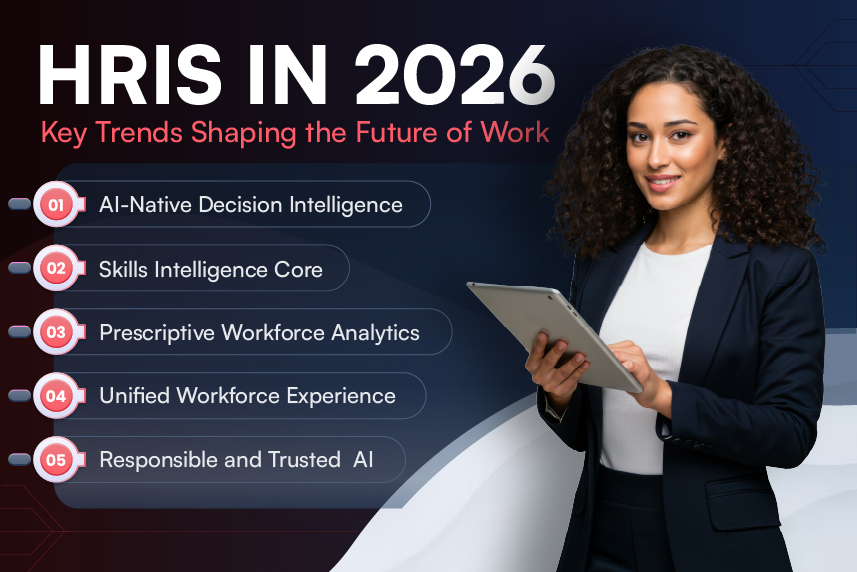
1. AI-Native HR Platforms Shift from Automation to Decision Intelligence
AI is no longer an add-on capability. It is becoming the foundational layer of modern HRIS platforms. However, the real shift is not just automation, but decision intelligence at scale.
AI-native platforms are redefining how organizations make talent decisions across hiring, performance management, and workforce planning. Instead of simply automating workflows, these systems continuously analyse workforce data, generate insights, and recommend actions in real time.
For example, recruiting systems are moving beyond resume screening to dynamically match candidates based on evolving skill needs. HR service delivery is shifting from ticket-based systems to conversational, AI-driven interactions. More importantly, AI is enabling HR leaders to make faster, more informed decisions that are grounded in both data and organizational context.
The next generation of HRIS platforms will not just execute HR processes but they will augment human decision-making across the talent lifecycle.
2. Skills Intelligence Becomes the Core Data Model of HRIS
Organizations are rapidly moving away from rigid job-based structures toward skills-based workforce models. As a result, skills intelligence is becoming the foundational data layer of modern HRIS platforms.
Leading systems now incorporate dynamic skills ontologies that map workforce capabilities, identify gaps, and enable internal mobility. This allows organizations to align talent supply with business demand in a far more agile manner.
However, the real differentiator lies in contextualizing skills data. Skills alone are not enough, organizations must understand how those skills are applied within specific roles, teams, and business environments.
HRIS platforms that successfully integrate skills, performance data, and business context will enable organizations to move from static workforce planning to continuous talent optimization.
3. From Predictive Analytics to Prescriptive Workforce Intelligence
People analytics has evolved significantly over the past decade. In 2026, HRIS platforms are moving beyond predictive insights to deliver prescriptive and actionable intelligence.
Rather than simply identifying trends, such as attrition risk or engagement levels, modern systems recommend specific actions, such as targeted retention strategies, reskilling initiatives, or workforce redeployment plans.
This shift transforms HRIS platforms from reporting tools into decision engines. HR leaders can move from reactive responses to proactive interventions, supported by AI-driven recommendations embedded directly into workflows.
The ability to combine analytics with domain context, for example organizational structure, industry benchmarks, and workforce behavior patterns, will determine how effectively these insights translate into business outcomes.
4. Unified Workforce Experience Platforms Replace Fragmented Systems
Traditional HR technology stacks have been fragmented across multiple systems: HRIS, learning platforms, performance tools, benefits platforms, engagement apps, collaboration systems, payroll systems, etc. This fragmentation creates data silos, inconsistent experiences, and limited visibility into workforce performance.
In response, organizations are shifting toward unified workforce experience platforms that integrate these capabilities into a cohesive ecosystem.
These platforms are designed not just for HR teams, but for employees. For example, embedding learning, performance feedback, career development, and collaboration into the flow of work to create a unified experience. AI plays a critical role in orchestrating these experiences, delivering personalized recommendations based on individual goals, skills, and organizational priorities.
The result is a shift from managing HR processes to enabling workforce performance at scale.
For deeper insights, explore our related article on how AI-driven training platforms deliver personalized learning experiences and support scalable workforce development programs, strengthening modern workforce enablement strategies.
AI in Workforce Training: Transforming Workforce Development Products with AI-Driven HR Tech
As organizations invest more in workforce enablement, HR platforms are also evolving to deliver more personalized employee experiences that mirror the intuitive digital tools employees expect today.
5. Responsible AI and Trust Become Competitive Differentiators
As AI becomes deeply embedded in HR decision-making, trust is emerging as a critical requirement. HRIS platforms increasingly influence high-stakes outcomes, such as hiring, promotions, compensation, and workforce planning.
This makes responsible AI not just a compliance requirement, but a strategic differentiator.
Leading organizations are investing in governance frameworks that ensure transparency, mitigate bias, and protect employee data. At the same time, they are maintaining human oversight in critical decisions to balance automation with accountability.
In the future, HR technology platforms will be evaluated not only on their capabilities, but on how effectively they build and sustain trust with employees and stakeholders.
The Future of HRIS: Intelligent, Context-Aware Workforce Systems
HRIS platforms are entering a new phase of evolution that is powered by AI, centred around skills intelligence, which enables contextual decision-making.
For enterprises, the priority is adopting systems that enable workforce agility, continuous learning, and data-driven talent strategies. For HR technology providers, the challenge is building platforms that integrate seamlessly into enterprise ecosystems while embedding domain knowledge and contextual intelligence into every layer.
In a world where technology is increasingly commoditized, context is the differentiator and domain expertise is the multiplier. Organizations that successfully leverage intelligent HRIS platforms will be better positioned to build resilient, adaptive, and future-ready workforces.
Frequently Asked Questions
1. How should organizations evaluate HRIS platforms for the future?
Organizations should look beyond core HR functionality and assess whether platforms provide AI-driven decision support, skills intelligence, and seamless integration with enterprise systems. The ability to operationalize insights into actions is becoming a key differentiator.
2. How do modern HRIS platforms support workforce transformation?
Modern HRIS platforms integrate data across hiring, learning, performance, and workforce analytics to enable continuous talent development and agile workforce planning. They move beyond process automation to actively support business outcomes.
3. What are the biggest challenges in adopting next-generation HRIS platforms?
Key challenges include integrating with legacy systems, ensuring data quality, managing organizational change, and establishing governance for AI-driven decision-making. A clear strategy and strong executive alignment are critical for success.